November 2026 · Essay
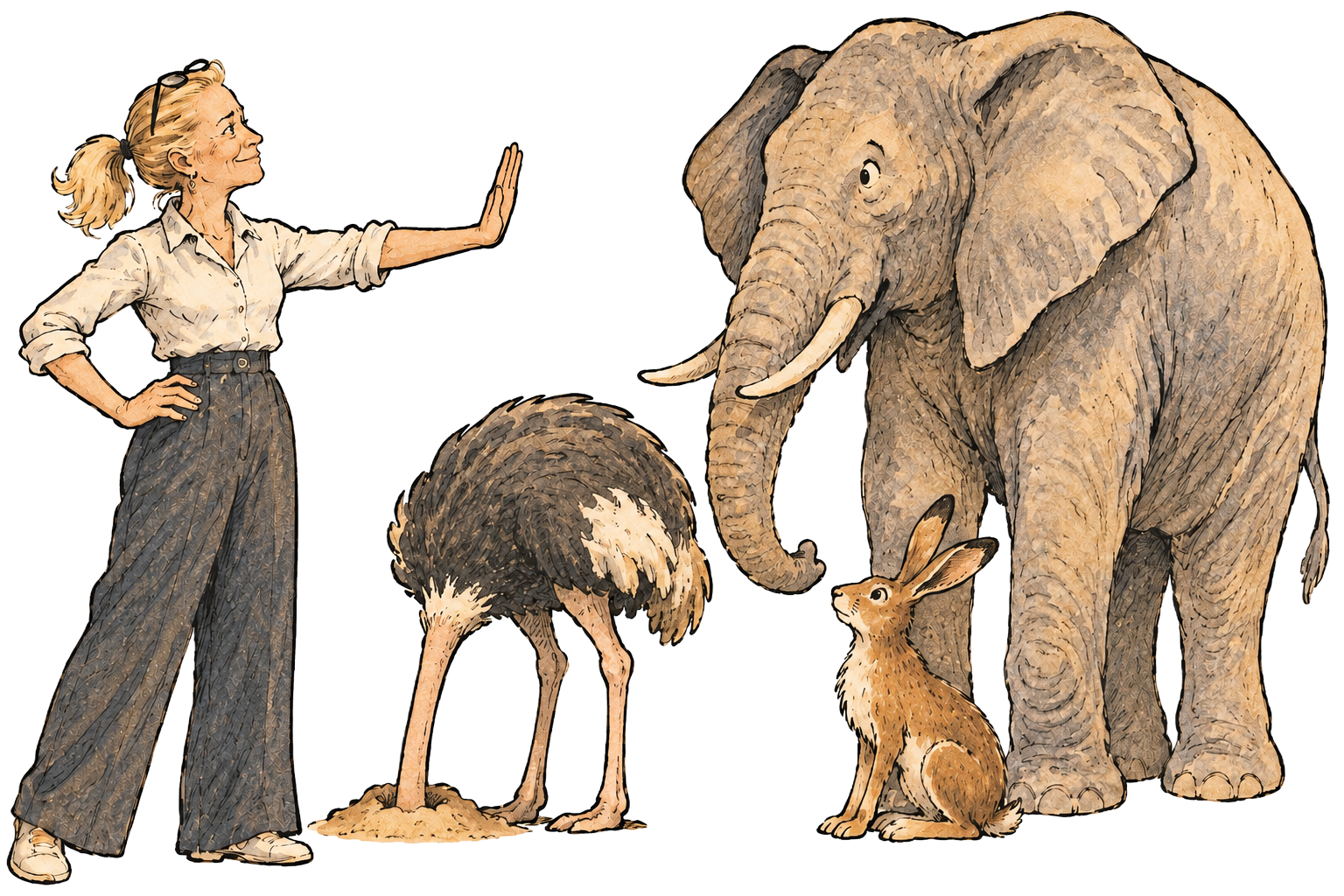
Saying no to the menagerie
You can't tackle a big job without some ground rules. Here are mine:
No elephants.
No ostriches.
And absolutely no hares.
In my experience, the results of the process are only as good as people's commitment to it. It might be easier to leave the elephant in the room unmentioned or keep our heads stuck in the sand, but unless we are completely honest with each other I simply can't help.
Yes, that takes trust right from the start. I recognise that. My clients have to be honest with me, and allow their colleagues, clients and partners to do the same. It takes guts. But without truth we can never build the trust that they need.
So on this one, you might have to take a leap of faith. Trust me and trust the process. Trust your people to speak the truth, and trust me to recognise it, harness and express it. Ultimately, you cannot serve people you don't understand.
What about those hares?
These things take time and, whatever our personalities, for this we are firmly in tortoise mode.
When I’m talking to people I want them to relax enough to say what they really think. They need to feel able to change their minds. They may want to challenge norms. For my part, there are always gaps, inconsistencies and competing pulls - unearthing and understanding them is a vital part of the process. And that can’t be done in a rush. (Incidentally it also, definitely, can’t be done through an online questionnaire or poll!)
And once we reach our conclusions? It takes time to activate them in a consistent and sustainable way. Even the most compelling organisational story is worse than useless if it clashes with what people experience.
Let’s say that one of your values is about respect. What does that mean when a brilliant but difficult team member is always rude to their colleagues?
Or that your purpose is to improve people's lives. How much does it influence the way you design services or respond to complaints?
And if your vision demands significant growth, how will you achieve that without accidentally jettisoning the things that people really love about you?
It’s this approach that turns your own Essential Truths from the product of a rigorous programme of research into the very engine of your business. They are practical tools for leadership at every level: designed to help everyone to make good decisions, know what’s expected of them and what to expect in return. Never forget it.
And that means that you want your people to be involved in bringing them to life. For one thing, they probably know the daily habits, conversations, nooks and crannies of the organisation better than you. Added to that, if they help shape that change, they are absolutely invested in its success.
There's a traditional Chinese saying: Not the cry, but the flight of a wild duck, leads the flock to fly and follow. As a leader, you have a particular duty to lead by example.
People will judge the organisation's ethos by the decisions its leaders make, especially when those decisions are uncomfortable or costly. And all the while, your future leaders are watching and learning, too.
Erika Clegg, strategic adviser to founder-led and family-owned organisations. Start a conversation.