Philosophy
People trust the truth®
Feel the love
I love John Lewis. I always have. From my childhood visits to the toy department with my granny, to decorating my first home at Peter Jones in my twenties, it's been an exciting, welcoming and rewarding place to visit. Even those boring bags still give me a thrill. Christmas and John Lewis always went hand in hand - every year Dad gave Mum Chanel no.19 and his return home on Christmas Eve with a small John Lewis bag was as much a part of the excitement as Slipper and the Rose, and the tree. My theory was that you would never regret a purchase from John Lewis - you trusted the quality, and the price. After all, they were never knowingly undersold.
Recently we've seen John Lewis struggle. They've diversified into building flats, lost focus on service and even jettisoned that famous brand promise. Along the way have come closures, financial losses and bad press. Yet however much they let us down I still love them and root for their revival.
That love is worth something. It gives a business another chance when it stumbles. It keeps people working there when they might leave. It makes communities fight for institutions that matter to them. It's a tremendous asset.
But it won't last forever.
Wasting away
John Lewis is by no means the only loved brand to have put its commercial future at risk by neglecting what made people love it in the first place.
In the 1920s a new Woolworths opened every 17 days. Towns lobbied to get one. During the war it raised enough to buy two Spitfires. My teens were spent happily browsing singles and glitter nail polish there with my friends. By 2008 it was gone. Debt and the financial crisis did the final damage, but its strategy had long since drifted from what people actually loved about it.
Kodak's own engineer invented the digital camera in 1975. Despite recognising the potential of digital photography, the company struggled to adapt and filed for bankruptcy protection in 2012.
Neither collapsed overnight and there are plenty more in danger of doing the same thing: manufacturers, institutions and retailers that are held in people's hearts but stopped rewarding our loyalty a long time ago.
I think the affection we feel for these businesses springs from what we might call an organisation's soul. This emotional essence can carry a business through an extended period of malaise, but it needs looking after. And it certainly doesn't excuse poor commercial decisions.
If you've taken responsibility for an organisation that people value, you'll know what a privilege that is. And what a responsibility. Perhaps you're worried that some of its magic has been lost. Perhaps you can see extraordinary potential that has yet to be realised. Either way, you want to do justice to what you've inherited and make it flourish.
A precious inheritance
Taking responsibility for a much-loved organisation means inheriting something precious. But understanding what makes it worth loving isn't always as straightforward as you'd hope.
Having spent much of my working life helping organisations identify what makes them valuable, I've seen how easily the qualities that once made them successful can be forgotten. Sometimes the Board recognises the problem straight away, but often they spend years stoically dealing with the symptoms instead of the cause.
Like someone who puts off exercise until the only remedy is a heart surgeon, it's easy to delay and so much better not to. If we ignore small signs, get used to them, adapt around them then they'll pile up until suddenly, bam, hello surgeon.
So why don't leaders look sooner? Partly because you're inside it. People don't always tell you things. Some assumptions you inherited were true once but aren't any more. And everyone has got so used to the water temperature that nobody notices it's boiling.
Here are the signs I see most often:
- Lack of unity and bad communication in the team
- Loss of personal and peer accountability
- Heavy reliance on the past at the expense of the future
- Systems and processes getting increasingly turgid
Here are others:
Leadership
- Decisions take too long
- People avoid difficult conversations
- Priorities keep changing
- Leaders spend too much time firefighting
Team
- Good people are leaving, recruitment is harder
- Cliques are forming
- Poor behaviour goes unchallenged
- Clock watching rather than pride in the work
- People don't talk openly
Clients
- New business is harder to win
- Long-standing customers leaving
- You're losing bids unexpectedly
- Customer relationships feel less personal
- Customers don't get a good experience
Reputation
- People raise an eyebrow when they hear your name
- Bad reviews on Glassdoor/ Trustpilot
- Different people tell different stories
- Marketing campaigns aren't working
- The organisation isn't living up to its reputation
Partnerships
- Suppliers less accommodating
- Partners have the power in negotiations
- Funders are losing confidence in you
- You're having to work harder at relationships
- People no longer recommend you
Relevance
- Competitors spot opportunities you miss
- Your offer is losing its appeal
- New ideas struggle to get a hearing
- You're better known for your past
- People can't explain why you matter
Viability
- Quality standards are slipping
- Work is duplicated or wasted
- Growth has stalled
- Cash is mismanaged
- Risks are ignored or concealed
Any one of these symptoms deserves attention. When several appear, you might be dealing with something more fundamental.
You can address each symptom separately, and sometimes you should. But if the underlying problem is that people no longer share a clear understanding of what the organisation is and where it's going, those pesky symptoms will keep popping up again.
When the gap grows between what an organisation says it stands for and what people actually experience, trust begins to ebb away. Among customers, colleagues and even those responsible for leading it.
Now is the time to make good choices. This is a reset. A recalibration. Not a rescue. You already have something precious, and people who want it to succeed. This is about recognising that the best times can lie ahead of that much-loved business, not behind it.
But to make that happen, people need something they can believe in. And that begins with the truth.
People trust the truth
Companies often talk about trust as if it were an action in its own right, something that will just happen if you say it. You'll often see it featured in a list of company values, for example. (Yes, that's why I wrote Junk Values!)
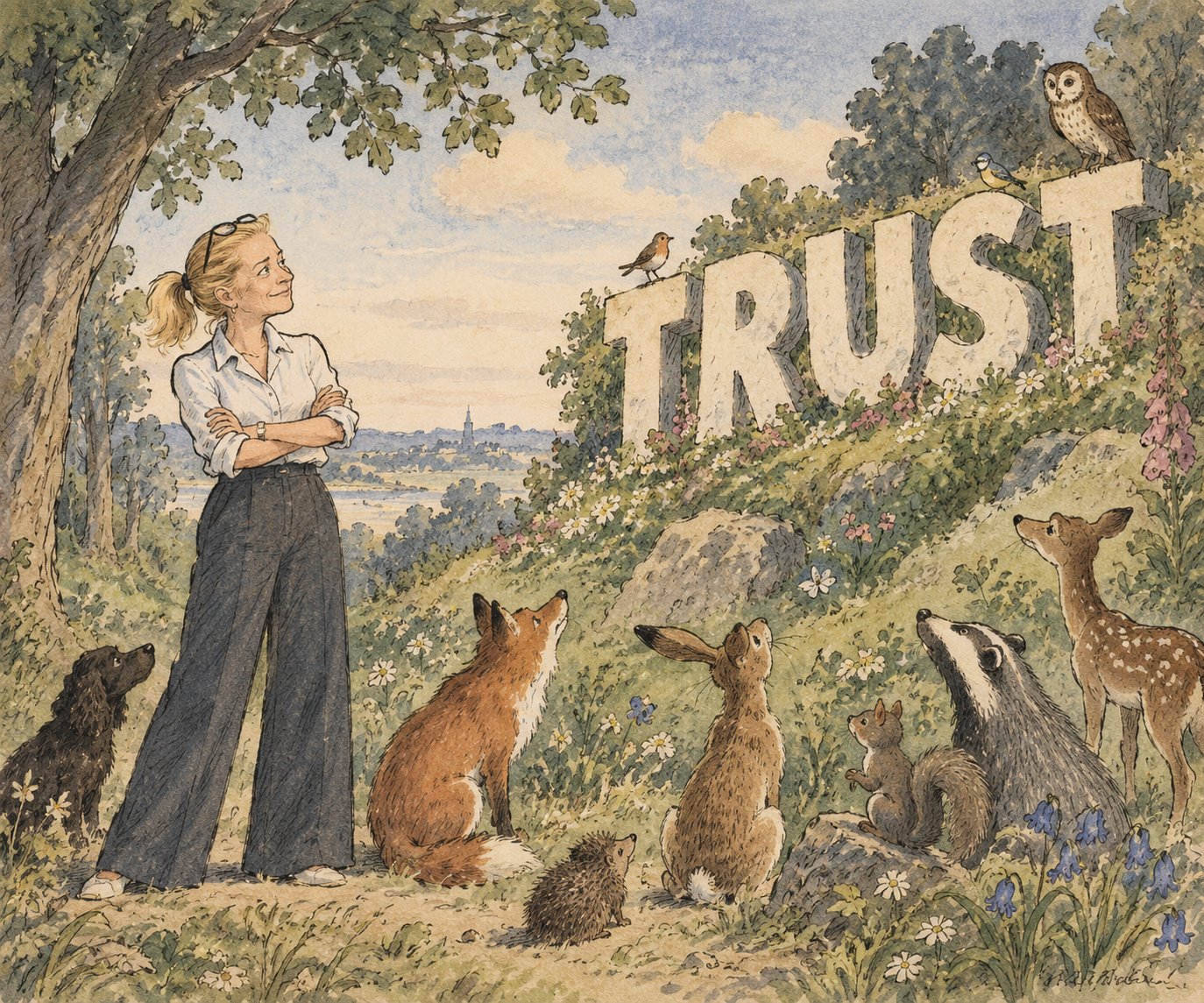
But trust is an outcome, not an action. In fact, it's an outcome of specific and consistent actions. To suggest anything else is to live in a fantasy land.
Because where we actually live is in a world where trust feels increasingly fragile. For 25 years, international communications agency Edelman has published its Trust Barometer, charting changing levels of trust in institutions, politicians and corporations.
In 2026, Edelman identified a growing tendency towards 'insularity', with people becoming less willing to engage with those whose views differ from their own. But its findings also highlight the importance of the people and institutions closest to us, including our workplaces.
For company heads, that presents an extraordinary opportunity. In a world of decreasing trust, organisations can become places where people find it, experience it and help it grow.
Why does that matter?
Quite simply, trust buys us freedom. Freedom to JFDI, without people breathing down our necks. Freedom to innovate. Freedom to mess up, once in a while.
And believe me, if you're not messing up occasionally, you're probably not innovating hard enough. If you're not innovating hard enough, you're standing still. And if you're standing still in the modern world, you're going backwards.
Trust makes organisations easier to lead.
People who trust, and are trusted by, their leaders are more willing to take responsibility and make decisions. Customers who trust a business are more likely to give it the benefit of the doubt when things go wrong, and return to it. And when people trust one another, they can devote more of their energy to doing useful work and less to protecting themselves.
So how do you earn trust?
I build my work around one simple and glaringly obvious insight: People trust the truth®.
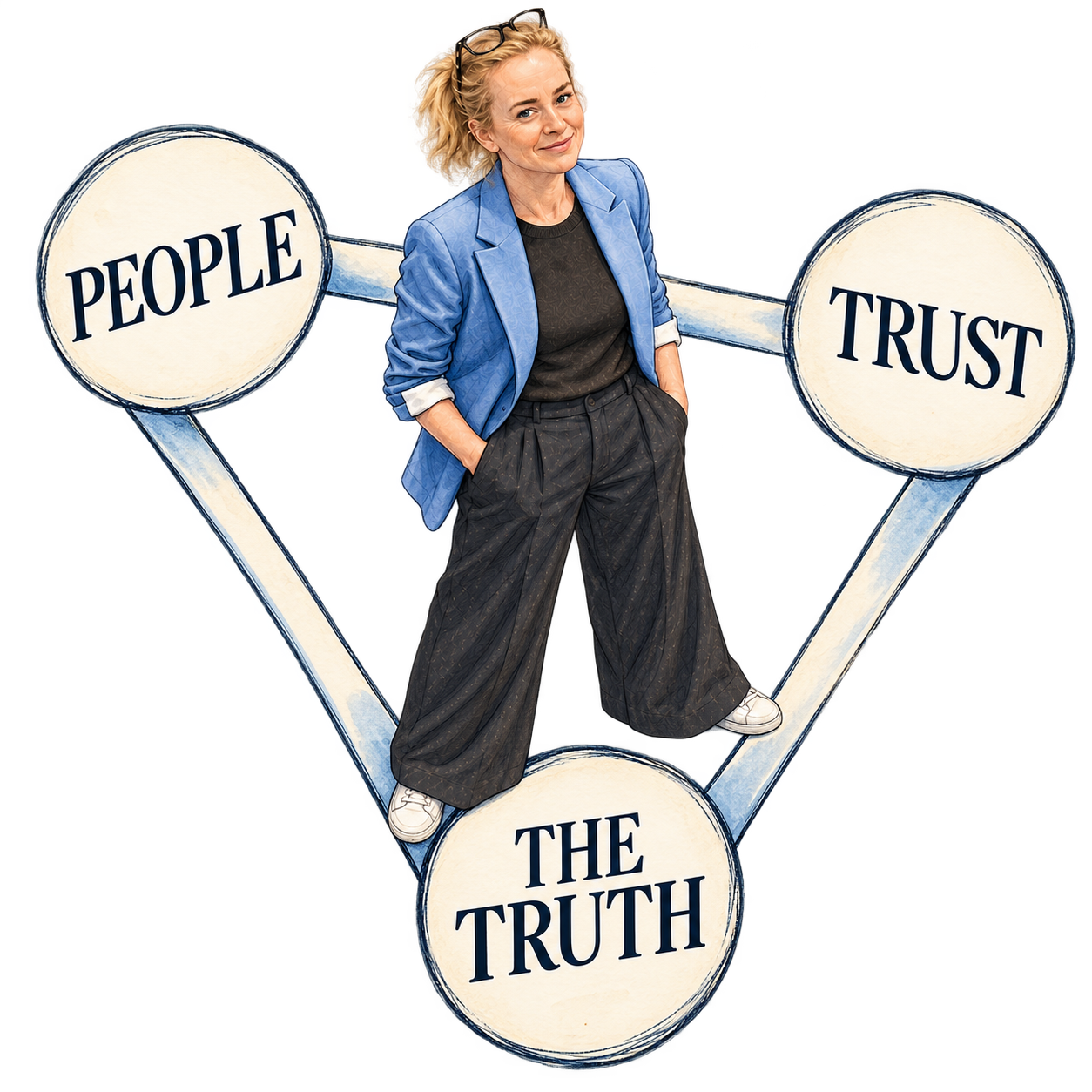
Yes of course people can be persuaded to trust something that isn't true. For a while, at least. But trust built on falsehood is fragile. Every broken promise makes the next one that bit harder to believe.
And that's why the truth matters. Not because people always want to hear it, or because being truthful guarantees their trust, but because it gives you something real on which to build people's trust.
People. Not stakeholders. Not service users. Not AI-replaced workers.
People. With their views, hopes, experience, knowledge, worries and connections.
People who have a remarkable capacity to contribute when they feel their contribution matters.
And to realise that potential, we have to listen to them. Really listen. Because people see things we don't, know things we haven't considered and experience the consequences of decisions we may never witness.
We can lose sight of the truth accidentally, by using the wrong language, having insufficient curiosity or making over-hasty decisions. Sometimes organisations deliberately obscure it. At every point on this scale, trust suffers.
Think about the organisation that says its people are its greatest asset whilst tolerating appalling behaviour from its highest performer. Or the business that claims to put customers first but always makes decisions for its own convenience.
Of course, we could debate for hours what exactly can be described as truth. The more we think through this, the more interesting that question becomes. In my work I draw on a very specific set of criteria: Essential Truths.
Essential Truths and trust
Every organisation has Essential Truths and a story, but sometimes they have been hidden over time. These aren't nebulous concepts. They're specific things and they sit in your business already. But they can be surprisingly difficult to recognise, particularly when you've spent years living and working amongst them.
I work with five Essential Truths:
Your Essential Truths
Heritage
Where you come from
Vision
Where you're going
Purpose
Why it matters
Values
Your behavioural principles
Soul
That thing that is you and you alone
Your story
Together they form the foundation of your story.
Your heritage is something to build on, not hide behind. Your vision must be worth working towards, your purpose worth believing in and your values worth living by. And your soul? That's what makes the whole thing unmistakably yours.
But there's a trap. What you believe to be true about your organisation isn't necessarily what other people experience.
You might be fiercely proud of your heritage, but your customers feel you've lost your way. You might have a compelling vision that nobody outside the boardroom understands. You might have values - proudly displayed on every wall - which cause your people to roll their eyes. And you might not know any of this.
The stories organisations tell themselves can become so familiar that nobody questions them. And the truth can be uncomfortable, particularly when it challenges decisions you've made or assumptions you've inherited.
That's why Essential Truths must be more than things we talk about. They must be recognisable in the decisions you make, the way you behave and the experiences you create. The British Army leadership code puts it well: 'When values are declared and followed, they form the basis of trust. When they are stated and not followed, trust is broken.'
So when your Essential Truths are reflected in what people actually experience, they've got something real to believe in and you've got a practical toolkit for making good choices.
Inside out
An outsider has a particular advantage here. I can ask questions that people inside the organisation have stopped asking, notice contradictions and follow unexpected answers. I have no established position to defend and no personal investment in preserving the status quo.
My responsibility is to discover what's true and supports the strategy, then help my clients put that understanding to work. That requires research and insight, commercial acuity and intuitive sense, creative skill and the courage to speak the truth.
When a founder came to me planning to hand his business to his daughter, the questions went far beyond succession.
What was it about this business that people valued? Which qualities were worth preserving, and which assumptions might be holding it back? The answers weren't always where we expected to find them. Customers, for example, often recognise qualities an organisation itself barely notices.
Saying no to the menagerie
You can't tackle something of this magnitude without some ground rules. These are mine.
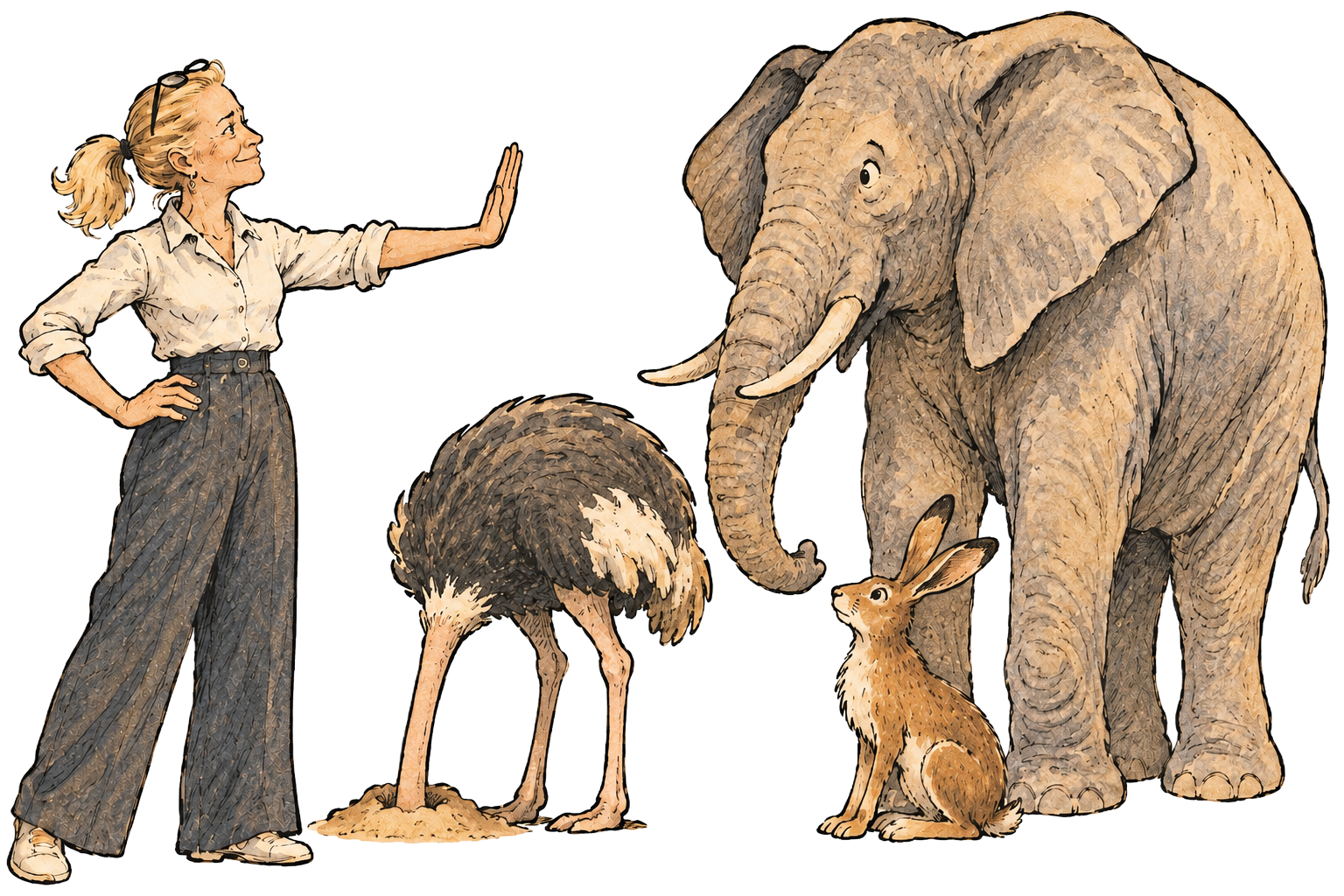
No elephants.
No ostriches.
And absolutely no hares.
In my experience, the results of the process are only as good as people's commitment to it. It might be easier to leave the elephant in the room unmentioned or keep our heads stuck in the sand, but if we're not completely honest with each other, I simply can't help.
Yes, that takes trust right from the start. I recognise that. For my clients not just to be honest with me, but to allow their colleagues, clients and partners to do the same takes real guts. And I ask my clients to accept that without truth we can never build the trust that they need.
So on this one, they might have to take a leap of faith. Trust me and trust the process. Trust your people to speak the truth, and trust me to recognise it, harness and express it. Ultimately, you cannot serve people you don't understand.
But what about those hares?
Well, these things take time. People need the space to say what they really think, to question assumptions and sometimes to change their minds. And even the most compelling organisational story is worth little unless it becomes part of the way people actually work.
If one of your values is respect, what does that mean when a brilliant but difficult colleague repeatedly undermines others?
If your purpose is to improve people's lives, how does that influence the way you design services or respond to complaints?
And if your vision requires significant growth, how will you achieve it whilst protecting the qualities that made the organisation successful in the first place?
These are the questions that turn Essential Truths into practical tools for leadership. They help people make decisions when priorities compete or circumstances are difficult, and establish a shared understanding of the behaviour expected of everyone.
For principles to become part of the warp and weft of an organisation, people need to be involved in putting them into practice. Those closest to the daily workings of the business are often best placed to recognise what needs to change. And when they help shape that change, they have a much greater reason to make it happen.
Those with overarching responsibility have a particular duty to lead by example. Other people will judge the organisation's values by the decisions its leaders make, especially when those decisions are uncomfortable or costly. And never forget that your future leaders are watching and learning, too.
There's an old saying: Not the cry, but the flight of a wild duck, leads the flock to fly and follow. When people see those principles reflected in consistent actions, not just words, their confidence grows.
People trust the truth is a virtuous circle. When people feel able to speak honestly, and see that their views are taken seriously, trust grows. That gives them the confidence to take responsibility, make decisions and contribute more fully.
And when those decisions reflect the principles the organisation claims to live by, trust grows stronger still.
And ... what if it works?
The results can be far more substantial than a clearer organisational story: though that, of course, is nice. When leaders understand what matters and give people a shared direction, something shifts. Decisions that once required endless discussion become easier. People stop waiting for permission and start taking responsibility. And leaders find they can spend less time managing difficulties and more time building the future.
For the founder and his daughter, discovering and sharing the business's Essential Truths brought the wider team into the handover, reassured customers and delivery partners, and helped repair a strained boardroom relationship.
A newly appointed Managing Director, now leading former peers, established a shared direction that helped rebuild relationships and a sense of responsibility throughout the business. Customer loyalty rose with it.
A CEO facing an abrupt change imposed by the business owners used a clearer understanding of the organisation's purpose and direction to turn HR into a strategic people-development function. The business retained and attracted talent, grew more profitable and encouraged its owners to stand back and let him lead.
Different businesses, different challenges. But in each case, a clearer understanding of what mattered helped people make better choices, strengthen relationships and move forward with greater confidence.
Chapeau to the leaders of those businesses for trusting me to help them. None of these changes happened simply because we found the right words. They happened because people were prepared to act on what they discovered, even when that required difficult decisions.
The best is yet to come
Of course I hope that dear old John Lewis finds its feet. Their story reminds us how much can be lost when an organisation's commercial direction becomes disconnected from the things that made people value it in the first place.
Every organisation has something special embedded in its history, its people, the contribution it makes and the qualities that distinguish it from others. The task in hand is to recognise those strengths, build on them and make sure the glory days lie ahead rather than behind.
Trust is earned when people recognise the truth in what they are told, what they experience and what they see others do. That's the thread running through my work with organisations, the people who lead them and the next generation preparing to take their place.
If this has made you think about an organisation you lead, work with or care about, I'd love to hear your thoughts. And if it brings someone else to mind, please do pass it on. These are conversations worth having.
People trust the truth®. Use it well.
Contact Erika